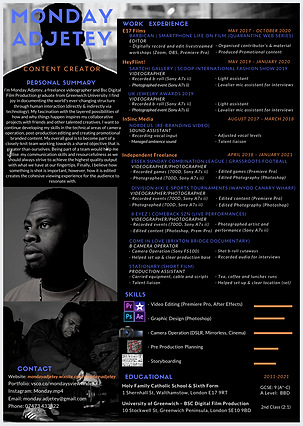
Big Creative Education is an apprenticeship provider based in Walthamstow, which aims to help young people find their path into the creative industry. After graduating from the University of Greenwich with an upper second class 2:1 in BSc Digital Film Production, I felt an apprenticeship would be the ideal pathway into gaining industry experience.
The Big Sky is a documentary production company based in Shoreditch who are transitioning into the travel, lifestyle and fashion content. They’ve shot for ITV, BBC Earth, Barclays, Bentley, Mercedes, Hyundai, United Air, Microsoft, GQ, Harrods, L’Oreal, Rimmel, River Island, Fenty Beauty, Swarovski, Next, M&S, Superdrug, Wired, Vanity Fair, Stand Up To Cancer etc...
I want to continue developing my skills in the technical areas of camera operation, post-production editing and creating promotional branded content. My overall goal is to become part of a closely-knit team working towards a shared objective that is greater than ourselves and striving to achieve the highest quality output with the resources we have at our fingertips.
Workplace Observation
BCE - Apprenticeship Junior Content Producer
Here is a portfolio evidencing my research, responses to briefs, practical work, skills I've developed and evaluated during my 1 year Junior Content Producer apprenticeship course at Big Creative Education. The workplace observation and showcase portfolios were part of my EPA (End Point Assessment) where I was tasked to present what I've learned. By laying everything out in a visual manner on my site, I was able to achieve a Level 3 Distinction grade as it helped me to visually show as much as tell.
Date:
K1. The key stages in an end-to-end workflow process for developing creative media content
From concept to finished piece, the video production process can be daunting due to the multiple moving pieces and ever-looming deadline. In order to streamline the process has been divided into 5 phases, with the middle 3 being most important. These are, pre-production, production, post-production, with ideation usually happening before and distribution rolling out at the end. In my role as a digital content producer using planning, organisation and communication tools such as Slack, Asana, Miro, and MailNote etc… helps me to keep on top of everything. Likewise, documents such as call sheets, shot lists, edit schedules etc.. are vital for being aware of declines.
Interestingly, the parts where I’m most effective in each production phase varies in skill and equipment required. For example, in pre-production, I’ll usually handle the assembly of pitch decks, while during production on set I usually AC (assistant camera), shoot B Cam or DIT. Whereas in post-production, I ingest, archive and am currently working towards developing my skill set in colour grading. An evenly balanced understanding of each phase of the process helps me to be more versatile, useful and understanding of my team members.
Pre-Production:
The pre-production stage of the filmmaking production process is where you create a vision for your film, a plan for production (based on that vision), and secure all the resources (humans, space, and equipment) you will need to complete your film
-
Scripting
-
Storyboarding
-
Shotlist
-
Budgeting
-
Location scouting
-
Hiring equipment and crew
-
Casting
-
Risk Assessments
-
Call Sheet
Production:
The production stage is when all the actual happens, crew meets cast, costume meets props, lighting meets set design, directing meets performance and sound meets visual. In most cases, being on a live set can be the most glamorous and collaborative part of the filmmaking process. However, with the added pressure of achieving all the shoots in time, communicating, maintaining focus, keeping composure and exciting the plan is key. The key is to achieve the clearest audio, capture the crisp images possible, tick off the well coordinated shot list and leave the set with an even amount of coverage/angles/takes for the edit.
-
Camera
-
Sound
-
Lighting
-
Set/Props/Costume
-
Producer
-
Director
-
Crew
-
Cast
Post-Production:
Post production is typically referred to as the aftermath, where a team of expert editors use advanced software and techniques to assemble the puzzle in preparation for distribution or final release. With the deadline approaching, the aim is turning raw footage into the final product with the help of an efficient workflow. This entails ingesting, transcoding, generating proxies, assembling projects, cutting visuals, cleaning audio, placing music, applying effects, animating text/graphics, colour grading and finally exporting.
-
Visual editing (cutting)
-
Audio mixing
-
Music placement
-
Visual Effects
-
Text/Graphics Animation
-
Colour Grading
-
Export
Date:
K3. How to produce content that is
focused on maximising engagement with intended audience
Audience segmentation is a useful way to analyse and target the right intended viewer or customer. It is the process of dividing a large sample size of people into smaller categorised groups Some of the categories could range from general points to more personal descriptions. Within my role, a site I often used when compiling client lists is D&B.com, this allowed us to target the right clients when conducting outreach and marketing. From occupation, income, location etc… to age, gender, ethnicity, religion, needs, values or characteristics. Segmenting an audience makes it easier to predict how different groups will respond differently to types of content, stimulus or calls to action.
Why Segment an Audience?
Creating an audience profile enables us to focus on the ideal audience members who are most critical to reach and likely to have a positive response. Through collecting data on viewing types, it becomes easier to match the most effective theme, message, media, product or service of a campaign to the right audiences and customers.
Date:
K4. How to write text for a
non-linear medium
Similar to most pieces of literature, scriptwriting is an art form. In order to understand the layout, we must be aware of the rules and structure to writing non-linear text. During my projects, I have been able to demonstrate script writing using a text editing software called WriterDuet. Notable pieces where I used this was inn my audio AD Sync-UP, our final short film IRIS and the voice overs for The Big Sky’s Purpose Disruptors x Cop 26 documentary.
Working from a template has allowed me to breakdown the format of traditional scripts. For example, setting scene descriptions, tagging INT. or EXT. (interior or exterior) locations, labelling characters, marking dialogue, character direction, transitions etc… Likewise, having a sense of pacing has aided me when estimating the rough runtimes of scenes. In this regard, screenplays typically measure each page to be a minute of runtime. In closing, knowing how to intemperate a scrip helps on set as you’ll be able to visually imaging details you;’d like your actors/performers/talent to touch on.
Date:
K5. The regulatory and legal requirements when using media assets such as copyright, intellectual property rights, web
accessibility etc
UK Copyright: https://www.gov.uk/copyright
Copyright can be defined as the legal right that protects the use of your work or intellectual property after bringing the idea into fruition. The UK’s current copyright legislation is the Designs and Patents Act 1988. The purpose of copyright law is to act as a system of rules which govern over ownership and the standardised way to fairly utelise media, content, concepts, functions, ideas and trademarks, without infringement.During the previous decade, the UK’s creative sector has experienced yearly growth. According to, the BBC’s Copyright Aware, What is Copyright? (BBC, 2015), “government statistics published in January 2014, the creative industry generates an average of £8 million every hour”.
The improper or unpermitted use of copyrighted material can result in legal ramifications or financial consequences. In an academic sense, coping work that is not owned by you is called the act of plagiarism which is also punitiable. However, a method of fairly incorporating the work of others to support your own assignment is called citation. This can be formatted in multiple written structures which are approved by governing bodies, the most notable being the Harvard Referencing Standard, which is used by the majority of universities across the UK. Likewise within academia, the accessibility to copyrighted material is overseen by organisations such as Creative Commons. The non profit aims to uphold ‘fair use’ which allows for students to reference officially published works for research, under the intent of educational purposes. This is typically granted through educational licenses acquired by institutions.
In some instances, copyrighted content can be change, sold, shared online or rented to individuals. to someone as well as prevent other people from doing those things. The latter is known as licensing, an effective way to allow others to use your content through payment.
Copyrighted material is inescapable in our current landscape, due to globalisation and the interconnected nature of our online world. We interact with intellectual property owned by others through the majority of long form movies/tv shows, online clips on YouTube, short form social media content, music on streaming services, images on Google, games sold, books, blog, or products we consume. Stated in, Rhys Hurd’s, UK media regulators launch parents' website (BBFC, 2011), governing bodies range from the BBFC (British Board of Film Classification) who oversee film, IPSO (Independent Press Standards Organisation) who govern print media, ASA (Advertising Standards Authority) who facilitate advertising and Ofcom (Office of Communications) who regulate radio, TV broadcast and commercial content. These are important to be aware of as a developing content producer as regulator bodies are vital in upholding standards across all mediums and platforms.
Date:
K6. How to publish web pages using mark-up and style sheets
There are various ways of displaying text in digital formats, these are called programming languages and the way of writing them is called coding. The most commonly known programming languages range from HTML, Python and JavaScript. Each has it’s own rules, benefits, limitations and capabilities. According to Alan Gurney’s, Java, HTML, Python...It's All The Same, Isn't It? (Excelwithbusiness, 2021), “Python is an object-oriented programming language that is designed to be accessible and simple for all users, HTML is a web language and is used globally to define the structure of web pages by using various tags”. During our lesson introduction into publishing text for web formats we explored HTML through a program called “Brackets”. This software allowed us to set aesthetic formatting tags such as text size, font, colour, Bold, underline, Italics, CAPITALISATION, highlights, positioning, and functional attributes like hyperlinking, • bullet pointing and 1.) Numbering.
Colour:
To edit the aesthetic properties of the web page I used the corresponding style sheet. This allowed me to highlight and manipulate specific lines of code. As the style sheet focuses on the creative elements, I felt it was appropriate to demonstrate the process of altering colours. In this example, I explored the functional applications of hexadecimals within HTML. Illustrated in, Color values (hex, rgba, and color names) - Webflow CSS tutorial (using the Old UI) (Webflow, 2017), hexadecimal code is a base 16 system which simply interprets colour values into binary code that can be displayed in hues through pixels. To make my web page more visually interesting, I wanted to change it from white to blue. I done this by opening a “Background” bracket followed by #00ddff which is the hex code for a light blue-ish shade of turquoise. However, like most software these days, Brackets has a built-in hexadecimal colour picker which is more visual and convenient.
Text Size/Font:
To edit the text which would be hosted on the webpage, I began by establishing a body section. Due to Brackets’ user friendly interface, some common commands are auto-filled in for beginner level users. The demo I started experimenting with consists of a header section, title, body section, text and web page/tab name. Along with the main HTML file, a style sheet was included in the demo folder. This is typically used to edit the aesthetic properties of the web page. To write text into the body section, <P> is used to open a paragraph
Hyperlink:
There are various ways to increase a website’s visibility, this is called SEO (Search Engine Optimisation). An article by Emma Iammarino, What Are the Different Types of SEO Marketing? (Sixthcitymarketing, 2020), listed a range of methods that can improve a site’s search ranking. This included creating effective backlinks, keyword tagging, having relevant visual content that supports text, quick site speed with optimised metadsata/file sizes, and fluid UX (User eXperience). To implement a hyperlink into my web page I followed a method mapped out in, 12: How to Create Links in HTML | Basics of CSS | Learn HTML and CSS | HTML Tutorial (Dani Krossing, 2017, 1:06). I began by setting an anchor tag “<a>” with a hyper reference “href=” attribute inside it. This will allow me to insert the http:// hyperlink to my actual portfolio which was built using Wix.
Date:
S1. Demonstrate how to operate media content capture equipment in a studio and/or on location in preparation for editing
A particular instance where I was able to demonstrate professionalism at my workplace was during a product shoot for the whisky brand Johnnie Walker. The shoot was over 2 consecutive days and spanned across separate locations, during which my job role was camera assistant and DIT. The client required our footage to be shot at 8K on a RED Monstro, which would provide enough visual detail for video and printed stills. This meant the file sizes of each shot would be huge. In order to ingest, we’d need enough memory space to hold the RAW data. Likewise, it was vital for us to have fast enough storage devices to transfer the footage from camera card, to storage drive (via Mac) and then the office servers after the shoot for the editors. For these reasons, I suggested for us to use SandDisk SSD’s as they typically have large capacity and much faster write speeds.
Furthermore, the edit was scheduled for a very quick turn around as post production was handled by our company. Meaning we’d have to transfer all of day 1’s footage to the server between both days. To put into perspective, we filled x6 1TB RED cards in total over 2 days (x3 each day). With typical DIT conventions I named each card #A001, #A002, #A003, #A004, #A005 and #A006. With day 1 complete and cards #A001, #A002 and #A003 safely transferred, I assumed that I could keep both SSDs in our production bag for the next day. Although unfortunately, by way of miscommunication between our co-producers, I was instructed to leave both new SSDs plugged into our server after day 1 to transfer overnight. This left us with the older and slower LaCie drives for day 2.
However, on location I anticipated that the bulkier LaCie drives would be far too slow when transferring all of the 8K footage on day 2. By quickly testing the 1st card of day 2, I estimated that it would take 3hours per card to successfully transfer all of the 8K footage using the clunkier LaCie drives. This might have caused a significant delay in our exit time. Similarly, I feared that using them could have resulted in transfer errors, due to me having to rush or move the laptop with the drives still plugged in while exiting the location. As a result, during lunch on day 2 I privately voiced my concern to both co producers. During which, I politely asked for permission to travel back to the office to retrieve one of the SSDs in time for all transfers to be made once day 2 was wrapped. Fortunately, they agreed for me to leave the set and thankfully I was able to rerun with enough time safely and securely transfer all of day 2’s footage.
On this occasion, I can confidently say that my expertise in data transfer and storage aided our team in being able to efficiently carry out the production. Moreover, I believe my calm presence and ability to handle pressure allowed me to make a rationally sound decision to prevent complications during our shoot. Finally, in retrospect, I believe having the conversation with the two co-producers at the end of day 1 would have helped to avoid the added stress. Regardless, I believe this was a valuable lesson for future reference. Overall, having technical understanding is useful, however, knowing how to communicate is much more effective.
Date:
S2. Monitor the technical quality to identify any problems during the capturing process
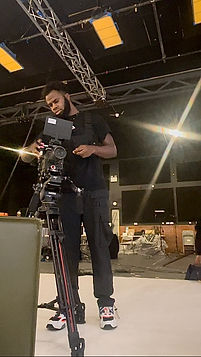
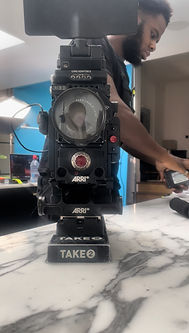
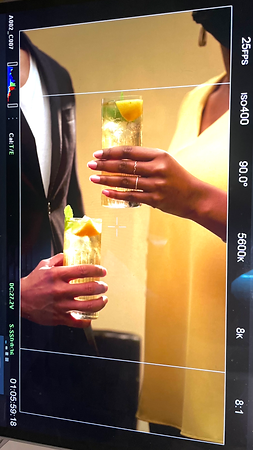
On set I’m usually given the supporting role of an AC (camera assistant), shooting on B cam or the trusting role of DIT. When camera assisting, I usually shoot on a RED Gemini 5K which requires me to monitor visuals, audio, positioning, movement, data, and battery consumption while working. Whereas on B Cam or BTS, I shoot with a Sony Fs7 or A7siii, on a shoulder rig or Zhiyun Crane V2, with audio shotgun mic or through a RØDE VideoMic Go positioned on top of the camera. Overall, the majority of cameras share a range of similar setting which can be used to achieve a particular look. These range from Appature, ISO, shutter speed/angle, FPS (frame rate), resolution, aspect ratio, white balance etc… Likewise, when positioning the camera or incorporating movement in framing, it’s important to consider space, shot size, focal length, resolution, aspect ratio, and where the content is intended to be seen. This will massively inform my lens choice. Furthermore, when maintaining exposure and sharp focus, display features such as histograms, zebras and peaking colours outlining focal distance helps to insure shots have a consistent quality.
The behind the scenes material is intended for our company's social media accounts, mainly Instagram. This means the final export resolutions/aspect ratios had to be 1080x1350/4:5 for vertical, 1920x1080/16:9 for horizontal or 1080x1080/1:1 for square. Likewise, Story posts have the distinct benefit of being 1080x1920/9:16. In order to edit the photography, I used Adobe Photoshop, whereas, for audio and visuals I used Adobe Premiere Pro.
As the A7iii has a full frame sensor, I tried to kill multiple birds with minimal stones by shooting photography vertically and keeping video at 4K. This allowed me to punch further into the frame without losing pixel quality when editing at a 1920x1080 project resolution. Similarly, as I intended to export both horizontal and vertical versions of the BTS highlights, I simply cut the first 3 drafts horizontally at 1920x1080/16:9, duplicated the timelines, changed the sequence setting to vertical 1080x1920/9:16 and adjusted the framing of each shot to fit the slimmer viewing profile. With a punchey 20 second run time, I melodically cut to the beat, faded ambient audio, applied logo sequences and applied a light grade.
Settings to Monitor:
-
Resolution: Video resolution refers to the number of pixels within a dedicated viewing area. This is often split into 3 areas, shooting, project/edit and export resolutions. Shooting resolution indicates the amount of data and information which could be captured by a camera’s sensor. Project/edit resolution typically refers to the timeline’s sequence setting. Export resolution illustrates the video’s viewing dimensions usually quoted as width x height (1920 x 1080). Essentially, higher dimensions will result in higher clarity and increasingly larger file sizes. Towards the latter part of last decade, the industry has transitioned from HD 1080P to 4K. The benefit behind shooting 4K means having a larger image to punch into when editing at lower resolutions (2K or 1080P, without losing clarity.
-
FPS: With the ability to shoot at high frame rates, I shot the B-Roll at 60fps and edited on a 24fps timeline. This required frame interpolation, which is the act of slowing down high frame rate footage to be fluidly played at lower frame rates. Converting the frames per second from 60fps to 24fps gave the footage a smoother feeling of slow-mo.
-
Lens: I used this technique when shooting on the Sony A7s iii for BTS content on a Bombay Sapphire campaign shoot. As we were on a live set, I chose to shoot from a distance to give the viewer a voyeuristic perspective. Shooting at 4K on 24mm, 35mm and 50mm lenses and editing at 1080P meant more of the environment could be captured and punched into, without having to get up close with or disturb crew/talent.
-
Colour Grading: In addition to image clarity, more image data is often stored which is ideal for retaining highlight/shadows for correct exposure, colour grading with a wider 10 -12bit colour spaces for richer tones/hues and making it easier for visual effects software to detect/track changes within the frames.
Date:
S3. Writing and editing copy for use in print and/or online
From data storage, advertising and in many other aspects of our lives, the developing dynamic between physical and digital formats has continued to create a divide in how we approach both formats. At first glance, printed media has notoriously attempted to present all relevant information in a succinct and compact fashion. In contrast, with the advantage of having infinite surface area, digital/online media often uses links, spacing, bullet points and multiple forms of content to present the same information. Despite both mediums being intended for the same audience in some cases, these viewers, audiences, readers or consumers act very differently, respond to unique stimuli and can have their attention retained in dissimilar ways. According to Print Media vs Digital Media (Gavin Ong, 2020, 2:13), both formats use similar techniques to grab the reader's attention, a sticking image and salaciously worded title in bold should be enough. Some things to consider when writing copy for both audiences are:
Intended Audience:
Who is the product, service or experience’s target audience? What is their profile (age, gender, race, religion, background, interest, occupation)? How might they prefer to be related to? Why would they be interested in the topic? How did they find out about the subject? What about their lifestyle suggest if they prefer one format to the other? What incentive have you established for them as a reward? What would you like them to do with the information you’re presenting them?
Length/wording:
Studies have proven that the amount of information retained after reading a print article and web article can range. In essence, we retain more information when reading in print. This means a greater emphasis can be applied to sentence structure for conciseness. Thanks to the skimming nature of web readers, the lengths of print/online text have become shortened, with carefully selected wording..
Formatting:
Due to differing attention spans between online and print reader, the content’s formatting and presentation can be implemented in more appealing styles to the correct audience.
Date:
S4. Selecting footage for editing, identifying the reasons for choice
An example of how my editing approach affected the final outcome of my content was in the BTS edits CBS Activists. For BTS content I usually shoot on the Sony A7iii which has a full frame sensor. It’s versatility as a DSLR is ideal as it allows me to shoot RAW photography and video at 4K.
With the ability to shoot at high frame rates, I shot the B-Roll at 60fps and edited on a 24fps timeline. This required frame interpolation, which is the act of slowing down high frame rate footage to be fluidly played at lower frame rates. Converting the frames per second from 60fps to 24fps gave the footage a smoother feeling of slow-mo.
Regarding video production, shooting at a 4K resolution is useful because it provides you with the ability to punch further into the frame without losing pixel quality. Especially, when editing at a 1920x1080 project resolution.
However, this can be labour intensive on editing machines as 4K, means there is 4x the amount of visual and audio data which has to be processed by the computer’s CPU. To bypass lagging and processing issues, proxy files are created, usually at half or a quarter of the original RAW footage resolution. This is called downscaling and can be done by encoding softwares like Media Encoder. Cutting with proxy files enables editors to fluidly navigate the timeline and playback seamlessly. Once the edit is ready for export, the process of relinking the clips back to the “master”/original RAW clips is called conforming.
Likewise, I intended to export both horizontal and vertical versions of the BTS highlights. This meant I had to assemble the 1st 3 drafts horizontally at 1920x1080/16:9 and then duplicated the timelines. This is where aspect ratio comes into play. After duplicating the horizontal timeline, I then went into the sequence settings of the new timeline and adjusted the parameters to vertical 1080x1920/9:16. Shortly after, I adjusted the framing of each shot to fit the slimmer viewing window using the positioning and scaling tools. With a punchey 20 second run time, I melodically cut to the beat, faded ambient audio, applied logo sequences and applied a light grade.
Date:
S7. Selecting clips and structuring audio in a way which tells a story clearly, accurately, and fairly
Importance of Pacing in Editing
Editors are underappreciated within the creative process of a project. In a role where the aim of your work is to be invisible and seamless, crafting a narrative into something cohesive can be challenging. Interestingly, an underrated technique which is often used by editors is pacing the number of cuts within a sequence, scene or edid. This is mainly done for specific types of content, to evoke emotion from an audience, show the passage of time or fit the purpose of the piece. In this assignment, I will be comparing between a fast paced edit and a slower paced ending, to show the effects both sequences give to the audience when viewing. Likewise, as the type of content can also dictate the pacing of the edit, I feel it would be fitting to compare a sportswear commercial to a short film scene. The differences will highlight how the pieces were also impacted by the shot choices, music choice, story and intended audience.
Fast:
Adidas f50 AdiZero Prime - Lionel Messi (2011) - Sportsware Ad - https://youtu.be/I73ytpwpMcM
In the video above, we compare the two Batman chase sequences from Batman v Superman and The Dark Knight — with particular attention to the pacing. In BvS, you’ve got quick cuts, tense music, and tight shots on the actors and the Batmobile. Though this might seem like a standard recipe for an action scene, compared with Christopher Nolan’s work, you see just how much more effective your narrative can be at creating suspense.
In The Dark Knight, you’ve got wide, long, and virtually silent shots that build the scene. The viewer can see where the characters are within the massive scope of the city. The slow buildup of tension and dread leads to the ultimate payoff in the inevitable meeting of the Joker and Batman.
Nolan’s recent Dunkirk, on the other hand, is full of tension, and the payoff is the calm scenes in between. If you’ve seen the film (no spoilers) there are attacks from enemy ships throughout the film. The central characters are trying to survive each sequence/attack only to move on to the next set piece that may or may not be destroyed. But since there are so many intense action sequences, only moments after the explosions cease can the audience (and our characters) breathe. The intense pacing of Dunkirk is also a product of the nerve-racking score that accompanies the film.
Slow:
Interstellar (2014) - Emotionally Tense Scene - https://youtu.be/MoLkabPK3YU
This example in There Will Be Blood is an essential demonstration of a technique to add to your video editing tool belt. Given the slow, drawn-out nature of the plot, editor Dylan Tichenor’s approach to dialogue involved cutting out audio from characters facing away from other characters, thus building longer pauses between exchanges. This might seem awkward and uncomfortable, but that’s exactly what Tichenor wanted. These long moments of silence add feelings of anger and tension to the performances — as well as significantly slowing down the overall pace of the film.
Since there is never really a big payoff, like we see in Sicario or The Dark Knight (even though one could argue the oil derrick explosion is quite the payoff), There Will Be Blood takes the slow approach and drags it out for the remainder of the movie, leaving the audience abandoned and miserable in the end.
Every director and editor has a different editing style that usually lines up with the type of story they’re telling. An Edgar Wright film is going to be quicker than a Sofia Coppola film. It’s all about finding out how to keep your audience engaged while telling a story the most entertaining way you know how.
Date:
S8. Selecting edit points which create a smooth transition in the material to achieve required effects
A project in which I used industry standard packages to edit was a series of exhibition pieces for RIBA (Royal Institute of British Architecture). The project depicts the stories of 3 iconic female architects spanning 3 countries (18th, 19th and 20th century). The series of performing arts pieces feature music/costumes that sonically/visually convey the journey, hardships and achievements of each inventor. My deliverables for this project was to edit 4x, 30min, 1080P, videos (1x for each of the 3 characters and 1x combined corridor scene with all the characters walking across frame). These videos were to be projected at the exhibition space. Regarding the assembly of the edits, I used a range of editing softwares for stills, video and graphics assets.
As I’m familiar with Adobe’s line of software, I used Photoshop, Premiere Pro and After Effects for each element. Likewise, Davinci Resolve was also useful for colour grading. The edits consisted of footage, music, graphic overlays, a vignette layer and a logo graphic. The graphic overlays came in the form of lens flares and light leaks to provide the sequences with a unique feel.
Premiere Pro:
The edits consisted of footage, music, graphic overlays, a vignette layer and a logo graphic. The graphic overlays came in the form of lens flares and light leaks to provide the sequences with a unique feel.To assemble the performances I used Premiere Pro. I began by organising my bins between ‘Visual’ and ‘Audio’. The visuals bin held subfolders consisting of images, interview clips, stock footage (if needed), logos, and text overlays. Whereas, the Audio bin held subfolders for music, sound effects, ambience and voice overs. As all the performances were unique, I split the edit into 4 Premiere Pro Projects, this helped to optimise my workflow by reducing the file sizes. This is because Premiere saves all edit decisions and and renders as part of the .PRPROJ file to help smoothen playback. However, to keep uniformity, I began working on each project using the same template. Furthermore, when assembling the final compilation, I was able to do so by importing and duplicating the needed sections into the 4th timeline. In the end, the elements/layers that required uniformity across all the videos included the vignettes, adjustment layered colour grade (LUT) and logos. Visually, to transition between sections I used fades by applying a cross dissolve tool. Similarly, in order to create a seamless transition between the music tracks I faded the volume and applied constant gain tools to switch between tracks for a gradual blend in to out.
Davinci Resolve (Colour Grading):
Davinci Resolve is a node based colour grading and video editing software. I had to apply a LUTs over the proxies as a reference and prepare the project to be graded on Davinci Resolve. As the fotage was shot on a Sony FX9, I chose S-Log 3 Rec 709. which is Sony's version of a standard colour look. Using DaVinci Resolve allowed me to manipulate the image with far more freedom, as the software was predominantly designed for colour grading.Before the grade, we had to prepare by transferring all the edit sequence from Premiere to Resolve using exported XMLs. The intricate features of the software provided me with the ability to colour correct. balance exposure, adjust contrast curves, increase saturation and apply a LUT as a finishing touch. Likewise, grading on top of RAW 4K footage allows for more edit layers to be applied on top of the footage, with less risk of damaging, distortion or banding appearing. This is due to more image data being stored within 10 bit or 12 bit video files. This makes it easier to retain highlight/shadows for richer tones/hues. Furthermore, more image information enables visual effects software to detect/track changes within the frames with greater ease.
After Effects:
In After Effects, I key-framed the RIBA logo to add a sense of movement. Admittedly, early on in the process, creative suggestion was to create a set of dynamic text graphics from key lines and phrases provided in the lyrics. I began by adapting a kinetics preset from Motion Media Group - Gravity Social Media Pack. This preset eliminates the need for animating and keyframing text from scratch, as each typography set provides a charismatic font and motion which are all customisable on After Effects. However, due to time constraints and creative differences, the idea was ultimately scrapped.
Date:
S10. Labelling and storing
materials accurately following organisational protocols
The act of transferring and safely storing material on set is called data wrangling. A common role I’ve played on set is DIT, which means transferring the footage shot on cards (RED MAG, C-Fast or SD etc…) to hard drives (HDD or SSD) as back up. Off site once the shoot is over, I’ll eventually triple backing up all the footage by uploading onto the office server in preparation for transcoding or making proxies, this is also known as the ingest phase at the beginning of the edit workflow.
To ensure that files and folders are sorted correctly for editors, it’s vital to follow a naming convention. The folder structure should be, project name_date > rushes > shoot day > camera type. When working in a multi-cam set up, establishing the A Cam, B Cam and C Cam (#A, #B, #C) helps as each batch of footage should be identifiable. Next, each batch of footage is numbered (001, 002, 003, 004, 005 etc…). This means #A001, #A002, #A003 is for A Cam, #B001, #B002, #B003 is for B Cam and #C001, #C002 and #C003 is for C Cam. In addition, it is as important to physically label the cards with camera tape as a mental note. Likewise, keeping the clapperboard’s “roll” slate in sync with the current card/batch which is being recorded on assists the editor when placing back footage.
Date:
S11. Demonstrating how to use search engine optimisation techniques
SEO (Search Engine Optimisation):
SEO is an abbreviation for Search Engine Optimisation, a term used to define the process of improving your site’s visibility and popularity. Increasing the search ranking of a site means there is a higher likelihood of discovery when people search for content, products or services related to a business on Google, Bing, Microsoft Edge, Yahoo, Fire Fox and other search engines. When scaling a business or online profile, reaching the top of search engines or recommendation al;gorithms can build trust, validate or provide credibility, which is vital after attracting intrigue and attention from potential or existing customers.
Ways to improve SEO:
-
Track metrics with Google Analytics
-
Optimize existing content for SEO best practices
-
Create new content based on keyword research
-
Diversify your backlink portfolio
-
Structure content to aim for featured snippets
-
Optimize images
-
Make sure your site is mobile-friendly
-
Optimize for on-page SEO factors
-
Decrease load times
-
Improve local SEO
-
Use your results to perfect your strategy
Types of SEO:
-
On Page - Optimisation of a website in a technical and aesthetic sense. Technical improvements can be in the form of keywording, tagging, content size compression, creating effective backlinks to increase the search value of the site. Aesthetic enhancements can be achieved through a cohesive design language, minimalist page coverage and reducing the number of individual elements in order to create a more fluid user experience.
-
Off Page - Optimisation of contributing content that is outside of a website, for the purpose of creating search links and minimising the amount of raw data on the site.This can be done in the form of creating additional landing pages, directories, sub sites or social media accounts to host more information, provide a service or post content in relation to the main site. The purpose of linking in-site content to other locations is to reduce the amount of data on the page, as a way of increasing site speed. This is typically done with visual/sonic content like high resolution photos, videos, graphics, animations and audio files etc… Simply put, hosting large sized files on a site will result in longer load times, which is frustrating for user experience so hosting videos on specialised sites like a vimeo account is more efficient. Likewise, creating a link between both online locations increases the likelihood of the content and your site getting clicks, thus gradually improving search ranking.
Date:
S12. Following health and safety procedures in the workplace
Health and Safety In The Workplace -
Professional film crews take health and safety issues very seriously. The line of responsibility runs from the Producer to the Production Manager and 1st Assistant Director and finally on to all crew members who have a duty of care which is recognised by law. If someone can see the potential for an accident and does nothing to try to prevent it, they can be held responsible in some way, probably along with their senior colleagues.
When filming, people have many things on their minds, things can get rushed, and risks can increase. Even simple things can become dangerous because this is not an ordinary situation. Of course, all of life presents hazards, but if someone is asked to run down a hill repeatedly to get the scene right, for example, the risk of them tripping and falling on their face is increased with each time they do this. If the hill is pavement rather than grass the risk of serious injury is increased.
Risk Assessments:
The way to stay safe is to look at each shooting set up or location individually and think of what exactly could go wrong. This is called a risk assessment, and can be an excellent exercise to do with your students. (if you don't work with the young people on it you will need to cover it yourself)
It's a three step process
-
Identify all the hazards
-
Evaluate the risks
-
Identify measures to control the risks
Then put in place safeguards to eliminate or minimise risk. You should make a record of any risk assessment to ensure the students are clear on how to stay safe. This can save time during your shoot. Rules about listening to each other, respecting a chain of command, looking after equipment properly, and not rushing, will all help to keep people safe and happy.
'Hazard' refers to the potential for harm. while 'Risk' is the chance of that harm actually happening. Though some hazards might seem very obvious, people might still need to have them pointed out.
Common Risks on Set:
-
Electricity - A common way to get zapped on set is by damaged equipment — lights that have been treated too roughly and wires that have become exposed. Unprotected extension cords driven over by a scissor lift will electrocute the next person who touches them. Power is deadly, and unless you know what you’re doing, don’t mess with it.
-
Tripping - Move or gaffa tape down cables and objects that could be tripped over.
-
Lifting - Go carefully when moving or lifting heavy or dangerous things, ask someone to help you.
-
Fatigue - On long shoots tiredness fatigue can set in, so it is vital to keep checking in with members of the crew, offering some much-needed downtime and providing support in the form of spotting. Unfortunately, many fatigue-related injuries go unnoticed or unreported so it is best to be aware of your limits and get regular periods of rest to avoid lapses in concentration or strain.
-
Water - As production has become heavily digitised, it is important to keep water away from kit and equipment.
-
Equipment - When a camera operator or cast member is walking during a shot, make sure they are comfortable with their route and there is nothing that could cause problems (a camera operator who needs to walk backwards for a shot should have an assistant to guide them and/or check their route).
Common Risks In The Office:
-
Slip, Tips, Falls - Common risk could be due to unattended spills, wet floors, exposed cords, unstable work surfaces, uneven floors, loose rugs and cluttered areas. Measurable ways to manage these hazards could be cleaning up all spills immediately, posting signs to warn bypassers. Likewise, keeping office walkways clear, electrical and telephone cords should also be properly secured and carpets should not be frayed or buckled to prevent tripping.
-
Fire - Within an office setting, fires could be caused by filthy electrical equipment, clutter, combustible/flammable materials or lack of staff training. Ways of preventing this, power cords should be inspected, replaced or frayed, keep clothing or flammable materials way from heating or radiators and sockets should never be overloaded with unnecessary plugs. Furthermore, fire exits must be clearly marked and drills must be conducted regularly.
-
Eye Strain - As we continue to depend on technology to make work more efficient, we might find ourselves sitting behind a screen for large parts of the workday. This could cause eye strain or long lasting optical issues. You can cut down on excessive glare by closing blinds, dimming the overhead lights, sitting at a safe distance, using the dark mode feature provided by most apps/sites and decreasing the brightness on all screens. To reduce eyestrain and fatigue, try to take regular 10-minute breaks, rest your eyes and focus on things at varying distances.
-
Lack of Natural Light/Ventilation - Poor indoor air quality has contributed to a rise in occupational asthma and other respiratory disorders, chemical sensitivity and allergies. Some causes of poor air quality are lack of windows, inadequate ventilation systems, overcrowded offices, cleaning chemicals, water damage, mold growth, bad air flow due to workplace layout. An effective way to manage or improve this could be to simply open windows/windows, manage waste regularly and prevent the accumulation of dust, pollen or dirt on surfaces. Likewise, restrooms, break rooms, lunch areas and refrigerators should be regularly sanitized and kept clean.
-
Equipment or Ergonomic Injuries - Employees spend many hours a day seated at a desk, working on a computer, or wearing headphones which may result in ergonomic strains and other injuries related to posture and repetitive movement. To combat this, taking regular breaks, standing, walking or exercising would be helpful. Also, a variety of adjustable chairs, desks, keyboards, etc., should be offered to accommodate the widest range of work styles. Additionally, it’s advisable to paying attention to any pain, fatigue, numbness or weakness, as these may be signs of an ergonomics problem and the start of a more serious issue.
Date:
B1. An ability to work effectively both individually and collaboratively as part
of a team
Early my placement at The Big Sky, I was integrated into their full team pitch workflow. This meant my role was to read the brief, assist with brainstorming ideas, format the Pages template into a working document for the whole team to work on in unaccent and source relevant imagery/assets for the concepts.
Pitch decks and treatments are vital as it allows a company, team or creative to visually translate a concept to the client. Essentially, converting an on-paper pitch into a fully realised idea which outlines logistic, creative and technical elements to consider throughout production.
The first campaign where I find myself having the most involvement in for a Patron product shoot, to advertise the brand’s tequila and proud Mexican heritage. Pre- production pitch decks usually consist of a synopsis, campaign/project overview, thematic/creative inspirations, mood-board, storyboard, individual concepts, casting, location rekey, budgeting, advertising/social media case study, crew ambitions etc...
Date:
B2. Recognition and compliance with equality and diversity in the workplace
The Landscape of Production Companies and Filmmaking in the UK
Imagine trying to describe an object which can’t be seen but constantly evolves in shape, I would like to compare this idea to how difficult it is to describe the UK’s ever-changing creative industry. There aren’t many industries as influential and unique as our creative space. This is due to the limitless formats/subjects content can cover and the ranging mass audience of which content resonates with. In this essay I will be focusing on how the playing field is gradually becoming more even for ethnic minorities with the implementation of government funded initiatives and the emergence of more (smaller) independent production companies inspired with making improvements on diversity across the creative landscape.
Firstly, I firmly believe that it is important for all audiences to be fairly represented in today’s media, what we see on screen will continue to inspire those of the same race, age, gender, sexuality, religion, physical ability and economic background to pursue a career in production behind the camera. Having a diverse workforce in the writer’s room (behind the camera) will inspire more unique stories and voices to be broadcasted to the wider society who may not be aware of what is happening elsewhere in the country. Orgad, S. (2012). Media Representation and the Global Imagination. 1st edition. London: Polity. pp. 18 states the importance of media representation as it, “functions like a mirror that reflects true meaning as it already exists in the world (…) thus the task of representation is adequately to reflect the pre-existing meanings of the real”. In this sense, more complex and culturally sensitive topics can be handled with a greater sense of care and authenticity as those involved in the production will be channeling through experiences. In turn, this will lead to the creation of more impactful bodies of work which will generate more revenue and resonate with a mix of niche (more dedicated) audiences and the wider mass audience. According to the British Film Institute. BFI.org.uk [Online]. BFI’s Diversity In The Workforce Evidence Review 2012 -2016, “we live in a diverse society, however, the screen sector’s on and off screen workforce does not reflect the diversity of the UK’s population as a whole”. This is due to ‘longstanding and complex barriers’ placed in-front of developing creatives seeking to walk through the doors of larger production companies such as the BBC, ITV and Channel 4. Frankly, it is disappointing to hear this as the screen sector is crucial to the UK’s influential output and this trend can have a negative effect on our country’s economy, political landscape and cultural impact which we export out to the world in the forms of media.
However, despite the glaring pros to having a more diverse workplace, it isn’t as easy from the prospective of independent company owners and recruitment departments at larger companies. Although gradual improvements are being made year by year, the ratio of applicants and employment isn’t as evenly spread out across the board, Morris, A. 2017. Dezeen.com [Online]. highlighted, “In 2016, BAME (black, Asian and minority ethnic) employees made up just 11% of the 32,422 people working in the creative industries – an increase of 5.8% on 2015”. Strictly looking at the numbers, some may say this uneven proportion is understandable as it reflects the wider UK population in 2016 which was 88.2% predominantly white with ethnic minorities making up roughly 11.8%. The low percentages can somewhat be attributed to the lack of opportunity and less ethnic minorities seeing the creative industry as a viable career path due to cultural, parental or economic influences. This means more time, money and resources must be spent by recruiting departments to broadcast their applications to attract a larger percentage off young talented ethnic minorities. Thankfully, we live in a time where independent thinkers can band together to create new innovative paths into the industry for young people with initiatives that provide more resources, support and guidance. An example of this is Creative Access UK which seeks to provide a helping hand in opening the door for young developing creatives who come from BAME (black, Asian and minority ethnic) backgrounds. Unfortunately, as things currently stand the large contrast across the landscape can be attributed to it being easier for production company owners to employ members of the majority instead of investing time and money into the minority. All businesses have profits and a bottom line to protect, but this must change!
According to the BFI’s evidence review regarding research on the UK’s film, television, animation and video games industries, the screen sector “generated over £6bn for the economy (2013), including £1.5bn in overseas investment (Olsberg SPI with Nordicity 2015)”. Furthermore, the British Film Institute (BFI) published data which suggest that, “the UK film industry alone had a turnover of over £10
billion in 2015”. In order to continue the upwards trajectory institutes like the BFI have focused to identify and address reasons why diversity in the industry, representation on screen and audience inclusion isn’t as fair as it should be. A report by Carey, P, Crowley L, Dudley, C, Sheldon, H and Giles, L. 2017. The Work Foundation.com [Online]. Work Foundation’s A Skills Audit of the UK Film and Screen Industries (2017) concluded that, “3% of employees in production are from a minority ethnic background, just one in five key production personnel are women, and only 5% of screen workers consider themselves to be disabled”. Steps toward a brighter future are being made through more funding of policies, projects and strategies such as the BFI2022 which seeks to support film education and skills development for young people by investing up to £20 million from the national lottery between 2017 - 2022 as part of the Future Film Skills action plan. The youth, teenagers and students like myself are the prime target to enact this change as there is greater power in numbers and the future is ours to mould with our progressive voices.
On the other hand, Saha, A. (2017). Race and the Cultural Industries 1st edition. London: Polity. pp. 95 questions the authenticity of governments provided schemes placed to “help” those from ethnic minority backgrounds to enter the creative space. Within the chapter analyzing diversity in media and cultural policy Saha examines if governments misuse the topic of diversity or inclusion as an easy ticket to improve their public perception and political agendas. He points at the small number of ‘survivors’ actually being inserted into the industry compared to the untold number of hopefuls left stranded looking for ways in. Likewise, Saha inquires if, “there is less discussion of what these minorities who have gained entry are able to achieve (or, rather, not achieve)”. This refers to the proverbial glass ceiling as although ethnic minorities are finding more positions within the lower entry levels of the creative landscape, this isn’t translating equally within the higher and more powerful positions where more influential decisions can be made. In addition, Saha encourages self-proclaimed “advocates” not to ignore, “the extent in which minorities are given autonomy that would enable their creativity”. Personally, I understand Saha’s pessimism in questioning the effectiveness of government schemes, how many people they truly help and how far they can take hopeful creatives. However, I believe the greater cause is more important as one person helped can go on to open the doors for a thousand more in the future. I argue that it takes time for the few scattered seeds today to grow into a forest tomorrow, in this sense we may not instantly see the change these policies our bringing about but we’re looking towards the future in hopes that we contributed in making the creative landscape a more even playing field for those coming behind us.
In 2016, award winning British actor Idris Elba delivered a speech in parliament addressing diversity in media & film, he touched upon the changing of the industry gatekeepers and the shifting of consumer power from the broadcast/box office era to streaming. He surmised that the job of British broadcasters was hard enough balancing “making cash, grabbing audiences and pleasing government” but now it’s become ten times harder with the immergence of streaming companies (Netflix, Amazon, Apple, Hulu) and independent online content creators (Youtube). Elber, (Idris Elba: Speech on diversity in the media and films, 2016) argued the importance of the UK TV and film industry making a larger effort towards diversity as, “If young people don’t see themselves on TV they just switch it off and log on. They create their own channels and create their own audiences, they (the consumer) don’t need us (the broadcaster)”. This view is compelling, as before there was only four main broadcasters whereas now everybody is a broadcaster due to the technology we have at our fingertips. This led to the introduction of an interesting initiative called Project Diamond in partnership with the Creative Diversity Network which will help the TV industry make some progressive steps. Project Diamond is an online system used to obtain consistent diversity data based on the casts and crews on programs commissioned by the BBC, ITV, Channel 4, Channel 5 and Sky. Furthermore, Elba suggested three ways in which commissioners, producers, directors, writers and casting directors could inch towards gradual improvements by focusing on diversity at the beginning of the creative process, transparently benchmarking achievements to encourage other companies to do better and taking more risks that will pay off in the long run. He finished off by concluding that in 2015, “only 1.5% of British TV shows/advertising is made by BAME directors” and although gradual changes are being made, we still have a long way to go.
In conclusion, each minor step we take guides us towards our collective brighter future as we lean closer to a world of tolerance and understanding. With the influence which our “tiny” island holds of the world’s media, it would be a great injustice for us to misuse our platform in continuing to unfairly portray all walks of life. Instead we must look to broadcast our true reality to parts of the world that can only imagine what life would be like if they were us. For young black aspiring creatives from London like myself, I feel it is especially important to build a network as colorful and inclusive as the underground map because although improvements to the landscape will take time, change starts with us. Finally, as a student I have a duty to hold a double-sided mirror up pointing at myself and the wider creative industry to challenge our understanding of pre-existing ideas through the creative work I develop.
Date:
5 - How to identify and manipulate media assets from various sources
During production, I’ve encountered a few scenarios where I had to identify and manipulate media assets from various sources. The most notable being edits for a series of WIRED x Aston Martin and WIRED -Robotics social post.
Firstly, for the WIRED edits I used Photoshop when editing photos, logos and the border around the videos. The challenge with both sets of edits was the varying difference in footage quality due to the interviews being sent in by companies and contributors. Due to most of the footage being shot on phones, the clips varied in aspect ratio and resolution. This meant I had to find an innovative way to keep the visuals clear, clean and consistent with minimal pixel distortion.
The boarder was a functional and aesthetic choice to provide a uniform theme across all the videos and manage the differing qualities of shots. As some of the contributors had shot horizontal 16:9 and some vertically 9:16 on different phones/cameras, I felt scaling all the footage to 1920x1080 would have highlighted visible inconsistencies in image quality. The horizontal videos would have held up reasonably, however the vertical videos would have turned out very blurry and unusable. Using a border with a smaller 16:9 viewing window made it preserve the clarity of all the contributor shot footage. meaning. Which meant the clips wouldn't have to be resized and could be kept at their original resolution. Similarly, the off white paper texture was a subtle touch that fit with The Living Wage’s workplace aesthetic.
Another instance in which I had to identify and manipulate media assets from various sources was in a series of social media posts for a WIRED x Aston Martin project for 007. The challenge was creating a consistent look between the photos as they were sourced differently, captured on various cameras and edited differently. This meant I had to colour grade them in order to match each other's look and feel.
The contrast in colours was due to the mix of pregraded stock shots, standard Rec 709 graded DSLR photos and stills from ungraded LOG RED footage. As a result of the various image sources, the colour grades of the photos differed. This meant the grades had to be matched in order to provide continuity within the final instagram post. As Rec 709 is a neutral grade, my plan was to match the ungraded LOG RED footage to the DSLR photos. Then depending on the intensity of the graded stock photo’s grade, I wanted to reduce the stock’s look to neutral or increase the values of the other photos to create an even match. As the stock shot had a light warm grade with a green tint, I decided to go with the reduction technique. In Photoshop, I began by decreasing the saturation, reducing the temperature to a cooler blue and shifting the tint from green to magenta. By doing so, the magenta values cancelled out the green hue which gave the image a more balanced look. Following up, I applied a Rec 709 LUT to the ungraded RED footage to even out all 3 images. Finally, I applied a light (...) LUT over all 3 images to create an even feel across the board.
Date:
7 - How to securely store and access media assets
With the digitisation of production, media storage spans across multiple formats. Storage has evolved from physical film strips to SD Cards, hard drives, the cloud and online platforms.
Within each step of the production workflow, each format is essential. For instance I typically shoot straight onto SD card with DSLRs, whereas for larger format cinema cameras I shoot onto C-Fast cards or SSDs as more data is captured, resulting in larger file sizes. When storing footage after shooting I use 2 - 4TB hard drives, a live hard drive with current projects that I’m editing and a secondary hard drive for complete projects. All raw footage (rushes) is backed up to the company server/iCloud as it’s designed with more capacity. Final edits are uploaded online, on either Google drive or online viewing platforms like YouTube or Vimeo for convenience in sharing.
Date:
1 - How to capture sound, photos and videos in preparation for non-linear editing
On one of my first jobs I began by shooting BTS footage on a product shoot for L’Oreal Revitalift. The campaign was for a TVC (Television Commercials) and featured one of their brand ambassadors Dr. Ophelia. The BTS footage I captured spanned across multiple formats, from photography and video. During production, I shot using a Sony A7siii, on a Zhiyun Crane V2, with audio through a RØDE VideoMic Go shotgun mic positioned on top of the camera.
The behind the scenes material was intended for our company's social media accounts, mainly Instagram. This means the final export resolutions/aspect ratios had to be 1080x1350/4:5 for vertical, 1920x1080/16:9 for horizontal or 1080x1080/1:1 for square. Likewise, Story posts have the distinct benefit of being 1080x1920/9:16. In order to edit the photography, I used Adobe Photoshop, whereas, for audio and visuals I used Adobe Premiere Pro.
As the A7iii has a full frame sensor, I tried to kill multiple birds with minimal stones by shooting photography vertically and keeping video at 4K. This allowed me to punch further into the frame without losing pixel quality when editing at a 1920x1080 project resolution. Similarly, as I intended to export both horizontal and vertical versions of the BTS highlights, I simply cut the first 3 drafts horizontally at 1920x1080/16:9, duplicated the timelines, changed the sequence setting to vertical 1080x1920/9:16 and adjusted the framing of each shot to fit the slimmer viewing profile. With a punchey 20 second run time, I melodically cut to the beat, faded ambient audio, applied logo sequences and applied a light grade.
The Sony A7iii’s ability to capture at a high dynamic range is due to it’s sensor’s 12 bit colour space and selection of LOG picture profiles which appear flat or desaturated. This allowed me to apply two sets of colour treatment by colour correcting to ensure each shot is at correct exposure and colour grading using a LUT (Look-Up Table).
A LUT is a calculated system which converts data and displays their new properties. In this case, a LUT adapts numeric colour values from raw footage and alters them to appear as requested on edited footage. The request could range from increasing saturation, applying vibrence, shifting hues, lift, gamma or gain in order to create a more aesthetically pleasing image. The three terms are similar to how shadows, midtones and highlights are described when treating exposure. Regarding colour, lift means black levels (shadows), gamma represents the midpoint (midtones) and gain symbolises white point (highlights). With more dynamic range and a larger colour spaces, multiple layers of colour grading can be applied to the footage without breaking, distortion or colour banding which signifies damaged files.
For editing Photography, I colour corrected using Adobe Lightroom and colour graded using Photoshop. This was ideal as I shot RAW files instead of JPGS. Editing with RAW image files provides the same benefits as shooting video in flat LOG picture profiles.It provides you with more room to adjust and manipulate colours.
Finally, I exported all content and displayed them on a social media spreadsheet, ready for quality check, copy and posting once greenlit by the client.
Date:
2 - Capture images and audio using basic video, still cameras and audio equipment.
Equipment:
-
Camera
-
Lens
-
Mic
-
Battery
-
Memory (SD Card, C - Fast, SSD)
-
Tripod
-
Stabiliser/Gimbal
-
Lighting
Shoot Types:
-
Inser
-
Over The Shoulder
-
Two Shot
-
Side Profile
-
Wide
-
Medium
-
Close-Up
-
Extreme Close-Up
-
Low Angle
-
High Angle
-
Ground
Composition:
-
Central
-
Symmetrical
-
Rule Of 3rds
-
Golden Ratio
Resolution:
Video resolution refers to the number of pixels within a dedicated viewing area. This is often split into 3 areas, shooting, project/edit and export resolutions. Shooting resolution indicates the amount of data and information which could be captured by a camera’s sensor. Project/edit resolution typically refers to the timeline’s sequence setting. Export resolution illustrates the video’s viewing dimensions usually quoted as width x height (1920 x 1080). Essentially, higher dimensions will result in higher clarity and increasingly larger file sizes. Towards the latter part of last decade, the industry has transitioned from HD 1080P to 4K. The benefit behind shooting 4K means having a larger image to punch into when editing at lower resolutions (2K or 1080P, without losing clarity.
FPS:
With the ability to shoot at high frame rates, I shot the B-Roll at 60fps and edited on a 24fps timeline. This required frame interpolation, which is the act of slowing down high frame rate footage to be fluidly played at lower frame rates. Converting the frames per second from 60fps to 24fps gave the footage a smoother feeling of slow-mo.
Lens:
I used this technique when shooting on the Sony A7s iii for BTS content on a Bombay Sapphire campaign shoot. As we were on a live set, I chose to shoot from a distance to give the viewer a voyeuristic perspective. Shooting at 4K on 24mm, 35mm and 50mm lenses and editing at 1080P meant more of the environment could be captured and punched into, without having to get up close with or disturb crew/talent.
Colour Grading:
In addition to image clarity, more image data is often stored which is ideal for retaining highlight/shadows for correct exposure, colour grading with a wider 10 -12bit colour spaces for richer tones/hues and making it easier for visual effects software to detect/track changes within the frames
Date:
6 - Prepare media assets for use
A key project where I was able to demonstrate my knowledge of data and file organisation was during the post production phases of the Nat Geo documentary, titles 'Shark Queens'. During this project, my role as the edit assistant was to ingest, transcode, create proxies and organise all the footage into bins for the editor. This process had to be done in preparation for the editor to join the project and begin editing.
In order to transcode, I made sure to use 4 different softwares in order to convert all the footage into editable files, while preserving all the data. It was important to convert all the footage into a uniform format as all the footage was shot on 5 different types of cameras. For the documentary, the RED Gemini acted as the A Cam, with a Panasonic as the B Cam, a Sony A7siii as the C Cam, then Go Pros as D Cam and a DJI drone as the E Cam. Regarding software, I used 'Kyno' to sort all the files with metadata filters. Next, I used 'Edit Ready' to change the frame rates of the high speed footage and create proxies. Then, 'QT Changer' was helpful in changing the timecodes of all of the footage to 'Time Of Day' as it helped the other assistant editor to create the sync map of when everything was shot. Finally, I used 'Davinci Resolve' to apply the respective REC 709. LUT over all the clips and batch export all the proxies.
Proxies are vital with high-end production as editing with 4K+ footage would create too much lag as playing back and rendering RAW footage is far too demanding on edit machines and softwares. For this reason, proxies are the same files but converted down to a smaller resolution, more ideal aspect ratio, typically at project frame rate, with less colour information and a LUT applied as a base grade for a rough visual idea of colour.
Date:
N - Identifying A.C.R (acquisition, conversion and retention) strategies
Acquisition:
Acquisition is the style of advertising used to attract new consumers who may be interested in a product, event or service. Typically, the goal of this method is to establish a relationship with a consumer, in hopes of acquiring their trust and loyalty towards your brand. For instance, during the search for a product we haven't purchased before,, we as consumers tend to weigh up our multiple options and compare between manufacturers. Stated by David Porter, ACQUISITION, CONVERSION AND RETENTION: GET YOUR KPIS RIGHT AND THE SALES WILL TAKE CARE OF THEMSELVES (PART 1/2) (tugagency, 2019), the intent behind the acquisition model is “leading the visitor from idle curiosity through to whole-hearted commitment”. An example of acquisition marketing could be intentionally stating why it would be in the consumer's interest to trust your brand or product as it provide something, new and exciting.
Conversion:
Conversion is a style of advertising used to change a consumer's decisions by encouraging them to turn towards a different brand, product or service. Usually, the purpose of this method is to pull a customer away from a brand which they already have a relationship with. This is called brand loyalty. In my opinion, this may be the hardest method to execute as we are creatures of habit and familiarity, motivating somebody to break a cycle can be difficult, especially if what they know has consistently worked for them in the passed. An example of conversion marketing could be intentionally displaying the specs, dimensions, compatibility, performance benefits and various other stats to promote a products functionality over competitors.
Retention:
Retention is a style of advertising which is used to incentivise existing customers by giving them reasons to stay, return for or re-purchase your product/service. This technique is often utilised when promoting content which is hosted under a subscription model. Due to consumers have to make multiple recurring payments, there are more moments where we have to consider if the price we’re paying is worth is, or if our satisfaction is being met. Interestingly, it’s also reported in David Porter’s, ACQUISITION, CONVERSION AND RETENTION: GET YOUR KPIS RIGHT AND THE SALES WILL TAKE CARE OF THEMSELVES (PART 1/2) (tugagency, 2019), that “Just a small increase in retention can have an enormous effect on profitability”. An example of retention marketing is when services include perks, exclusive incentives, promotional events or discounts in order to entice us to continue providing our support to the brand. Likewise, it’s an effective way to increase brand loyalty as we’ll feel a sense of care from the platform as the rewards will provide a uniquely sentimental experience.
Date:
N -Behavioural Triggers Research
Behavioral triggers can be cleverly utelised when attempting to deliver the right message, to the right people. Knowing how different types of people think and how that relates to their response to a range of stimuli can be helpful in predicting, targeting or attracting their attention through carefully crafted marketing campaigns. Considered as valuable by advertisers, data can be collected using automated software such as online surveys, ad cookies, transactional data tracking and social media monitoring. Some methods are voluntary and others are not as reliant on users willingly submitting their information. What Are the Methods of Data Collection? (lotame, 2019) defines, quantitative data typically refers to numeric results found in analytics. Whereas, qualitative data is written descriptively. All of which is often used to simulate target audience profiles.
As creatives, we sit at an interesting cross section between consumers and advertisers of products/services/experiences. We’re both influenced, while being conscious of how to influence others through our work. According to, Neuromarketing: The new science of consumer decisions | Terry Wu | TEDxBlaine (TEDx Talk, 2019, 4:26), Dr. Wu sites a study from 2004 stated that, “Our thoughts, feelings and memories can unconsciously be changed by our experience with a product”. This was in relation to the failed New Coke marketing campaigns in 1985 which were backed by market/consumer research. The unprecedented response from consumers signified the importance of perception, nostalgia, sentimental value and interpersonal connections which consumers unconsciously affiliate with brands.
Methods of influencing the response of online users can range from call to actions, attaching influential personalities, button/prompt placement, page layout, text formatting, selective colour blocking, displaying bits of visible information, pop ups, site redirection, evoking emotion through music selection, synchronous/asynchronous sound effect placement, introducing incentives, clickbait/misleading titling, increasing demand by promoting exclusivity, price comparison, displaying time limit, minimal UI navigation paths etc… In the context of product/ service purchasing, convenience and an array of personal factors can alter our perception of spending. According to, The psychology of digital marketing. Rory Sutherland, Ogilvy. (GDS Summits, 2018, 24:23), the vice chairman illustrates that psychological consumer studies suggest, “£15 if you pay for it on a contactless card feels 15% cheaper, compared to paying by chip and pin. However, paying with cash will feel more expensive” . This same logic can be applied to the convenience of subscription services, in comparison to making repeated single payments.
A brand I’m heavily inspired by is Adidas. In reaction to my personal profile being German born, the brand’s influence during my formative years was simply inescapable. I also believe my love for football and later discovery of my interest in basketball also played a part. The age-old marketing gimmick of “Play Like (Your Favorite Athlete)” intrigued me as I found myself gravitating to Lionel Messi’s bootline and LeBron James’ sneakers, despite being fully aware that their signature shoes wouldn’t turn me into an anomaly of a professional athlete. The most prominent instance of athlete focused product endorsements is Nike’s “Be Like Mike” campaign throughout the 90’s to promote Michael Jordan’s signature shoes and various products like Gatorade. However, as I’ve grown, I’ve found their brand ethos in prioritising performance has always drawn me to their products.
Date:









Showcase Portfolio
K13. - Wider industry awareness and the
culture of creative media organisations
Types of production companies:
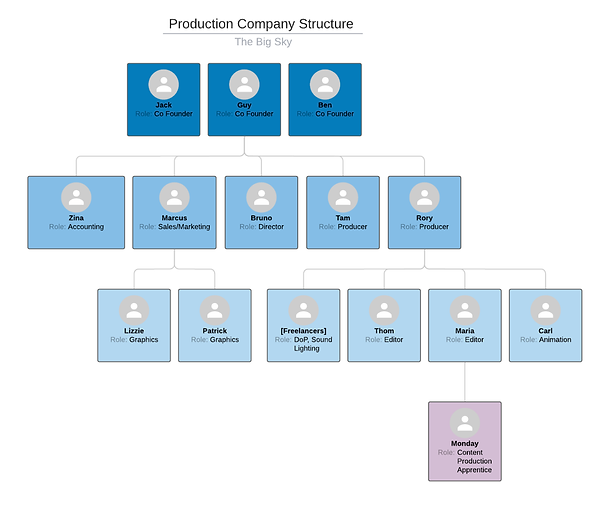
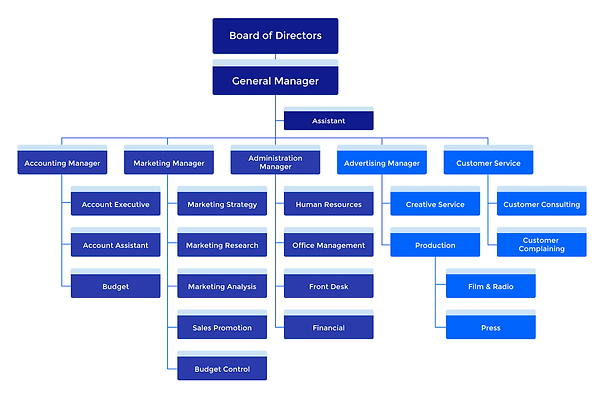
Production companies range in size and Mainly to encourage the spirit of collaboration between departments, enspire the flow of ideas, ensure that tasks are completed efficiently, ease the workload and reduce the risk of delays or technical errors. As companies range in size, their structure and operations vary. Company structures can range from vertically integrated huaraches for larger conglomerates or horizontally integrated models for smaller companies.
-
Small - Whereas, smaller companies like my company, The Mill or Fresh Cut usually specialise in specific types of content and hire smaller production companies/freelancers for services
-
Large - Larger conglomerates like Netflix typically own subsidiaries and are capable of overseeing multiple projects from beginning to end
Types of Employment Contracts:
Full-Time - A full-time contract is often seen as the maximum type of employment which is offered by companies. In an ideal sense, a full-time contract should be double the amount of hours and pay of a part-time contract. In the UK, a full-time contract expects employees to work 35 hours or more per week. However, workplace regulations state you cannot work more than 48 hours a week, unless specified in your contract. The typical case where working more than 48 hours per week can be an exception is when there is 24-hour staffing as a member of security, the armed forces or the emergency services. However, if you're under the age of 18, it is illegal for you to work more than 40 hours a week.
Employer -
Pro -
-
Long-term employee commitment
-
Fixed salary (Weekly/monthly pay)
-
Fixed working patterns
-
Building a long-term relationship with employee
Con -
-
Larger salary
-
Paying salary even during quiet or reduced periods
-
Requires committed employees
Employee -
Pro -
-
Long-term job security
-
Annual leave (holiday)
-
Parental leave
-
Paid sick leave
-
Pension/retirement plan
-
Health insurance
Con -
-
Demanding hours
-
Contractually obligated or tied down terms
-
Work/life balance
Freelance - A freelancer is someone who is self-employed and often not committed to one single employer. They rarely have the same employment rights as someone employed full time but there are benefits of freelancing, such as flexibility and the ability to work around their lifestyle. Companies often outsource work to freelancers on short-term flexible contacts for specific jobs.
Employer -
Pro -
-
Short-term employee commitment
-
Flexible working hours
-
Employed on short notice
-
Specialist roles
Con -
-
More pay
-
Overtime negotiation/agreements
-
Uneven or fluctuating salary
-
Paying salary even during quiet or reduced periods
-
Onboarding and offboarding
-
Less qualification required
Employee -
Pro -
-
More pay
-
Negotiable terms
-
Flexibility with less working hours
-
Overtime
-
Specialist roles
Con -
-
No benefits, perks, ensurance
-
Lack of guaranteed employment year round
-
Hours are not as structured
-
Uneven or fluctuating pay
-
Responsibility of invoicing and doing taxes
Apprentice - An apprentice must sign an apprentice agreement giving details of the skills, trade or occupation the apprentice is being trained for and the amount of training that the apprentice will be given. It provides the employment details of the apprenticeship. Anyone aged over 16 who is not currently in full-time education can apply for an apprenticeship.
Employer -
Pro -
-
Young workers
-
Short-term employee commitment
-
Fixed salary (Weekly/monthly pay)
-
Smaller salary
-
Building a short-term relationship with employee
Con -
-
More regulations
-
Overtime negotiation/agreements
-
Uneven or fluctuating salary
-
Paying salary even during quiet or reduced periods
-
Requires committed employees
-
Less qualification required
-
Less experience
Employee -
Pro -
-
Flexibility with less working hours
-
Overtime
-
Short-term job security
-
Annual leave (holiday)
-
Pension/retirement plan
-
Less qualifications needed
-
Learning while working
Con -
-
More work hours
-
Less pay
-
Menial tasks
-
Hours are not as structured
-
Uneven or fluctuating salary
Types of companies:
The creative industry is a vast and ever-expanding landscape that requires a multifaceted team with imaginative and technical knowledge to produce a collaborative project. There can be many benefits of production crews possessing interlocking skills. Mainly to encourage the spirit of collaboration between departments, enspire the flow of ideas, ensure that tasks are completed efficiently, ease the workload and reduce the risk of delays or technical errors. As companies range in size, their structure and operations vary. Company structures can range from vertically integrated huaraches for larger conglomerates or horizontally integrated models for smaller companies. Larger conglomerates like Netflix typically own subsidiaries and are capable of overseeing multiple projects from beginning to end. Whereas, smaller companies like my company, The Mill or Fresh Cut usually specialise in specific types of content and hire smaller production companies/freelancers for services.
Interdependencies:
For example, as a camera operator or member of the filming department, my introduction to the project would happen before the filming days, typically during pr production. During the conception of the narrative, I’d have to work in close proximity with the writers/director to understand the story, liaise with the producers to ensure that we have the right equipment (within budget) and collaborate with previs/storyboard artists in order to plot out my shot list.
During the production phase, projects are usually overseen by producers or production managers. Which means the logistics, equipment, crew and talent and cast’s needs are handled by them. On set, the camera department works hand in hand with the gaffers/lighting department to create a pleasing aesthetic, with the sound department for clean/synced audio, photographers for promotional content, set designers for the environment and prop specialists/costume for continuity.
Furthermore, my technical and creative understanding can be helpful to editors or members of the post production departments. Having a shared understanding of the final outcome is vital, as shooting at the right settings, format, resolution, aspect ratio, picture profile or frame rate will ensure that they’ll have the best quality of footage to work from.
Date:
K14. - The commercial pressures, project
deadlines and organisational working
practices within creative media
From concept to finished piece, the video production process can be daunting due to the multiple moving pieces and ever-looming deadline. In order to streamline the process has been divided into 5 phases, with the middle 3 being most important. These are, pre-production, production, post-production, with ideation usually happening before and distribution rolling out at the end. In my role as a digital content producer using planning, organisation and communication tools such as Slack, Asana, Miro, and MailNote etc… helps me to keep on top of everything. Likewise, documents such as call sheets, shot lists, edit schedules etc.. are vital for being aware of declines. Here are a few of mine from various projects I’ve worked on at The Big Sky.
Pre-Production:
The pre-production stage of the filmmaking production process is where you create a vision for your film, a plan for production (based on that vision), and secure all the resources (humans, space, and equipment) you will need to complete your film
-
Scripting
-
Storyboarding
-
Shotlist
-
Budgeting
-
Location scouting
-
Hiring equipment and crew
-
Casting
-
Risk Assessments
-
Call Sheet
Production:
The production stage is when all the actual happens, crew meets cast, costume meets props, lighting meets set design, directing meets performance and sound meets visual. In most cases, being on a live set can be the most glamorous and collaborative part of the filmmaking process. However, with the added pressure of achieving all the shoots in time, communicating, maintaining focus, keeping composure and exciting the plan is key. The key is to achieve the clearest audio, capture the crisp images possible, tick off the well coordinated shot list and leave the set with an even amount of coverage/angles/takes for the edit.
-
Camera
-
Sound
-
Lighting
-
Set/Props/Costume
-
Producer
-
Director
-
Crew
-
Cast
Post-Production:
Post production is typically referred to as the aftermath, where a team of expert editors use advanced software and techniques to assemble the puzzle in preparation for distribution or final release. With the deadline approaching, the aim is turning raw footage into the final product with the help of an efficient workflow. This entails ingesting, transcoding, generating proxies, assembling projects, cutting visuals, cleaning audio, placing music, applying effects, animating text/graphics, colour grading and finally exporting.
-
Visual editing (cutting)
-
Audio mixing
-
Music placement
-
Visual Effects
-
Text/Graphics Animation
-
Colour Grading
-
Export
Date:
K15. - The principles of negotiation and how
to apply these when acquiring channel and
platform space or time.
Buying and selling YouTube channels is an increasingly profitable endeavour and the proof is in the number of channels we have for sale at Trustiu. However, many people still have doubts regarding these types of sales. How do they work? Is it legal to buy a YouTube channel? How much might a YouTube channel cost? How long do these operations take? At Trustiu we want to clarify these questions, so keep reading this article and discover all you need to know about buying a YouTube channel.
Thinsgs To Consider:
-
How many followers does the channel have?
-
Is it monetized?
-
If so, what is the monthly revenue?
-
How old is the channel and what is its evolution?
-
Does it have any strikes?
-
How many videos does the channel have?
-
Where is the channel’s audience?
-
Is there a face associated with the channel?
How do I transfer a YouTube channel account?
A YouTube channel may be associated with multiple email accounts (Primary Owner, Owner, Manager). However, each YouTube channel has only 1 primary owner and this is the account that has access to all channel functions. This account is considered the owner of the channel. When you buy a YouTube channel the first thing to do is to ask the current primary owner to put you in as the owner of the channel and then replace you as the channel's primary owner. This request takes 24 hours to be validated due to YouTube policies and only after this time will you actually own the channel. After 24 hours the next step is to delete the other accounts associated with the channel so that you have full control.
How to buy a Youtube channel?
At this point you already know most of the points that you should take into consideration before buying a YouTube channel. To buy a YouTube channel you just have to search and find the contact details of the channel owners if you want to buy and reach an agreement with them. In Trustiu this is precisely what we do, we talk directly with several YouTubers and try to find out the best deals to put in our marketplace.
Cost of Social Campaigns:
Social media marketing is the practice of promoting your business or cause online, through social media platforms. The most common platforms include Facebook, Twitter, Instagram and YouTube. Though Pinterest, Tik Tok, Snapchat and Reddit are also highly used too.
The goal is to create content that both helps to build your audience and connects with them too. Social media marketing agencies or social media freelancers will plan content, schedule it and monitor the results. By looking to see what works for your platform, a social media marketing expert can streamline your goals with tailored content that gets put out across your social media channels.
Their expertise can also create successful paid advertising campaigns. This can help you reach a wide audience quicker versus organically building traffic across your pages.
Things To consider:
-
The complexity of the service
-
Hourly rates vs. packages
-
Professional’s experience
-
Your social media marketing goals
-
Social media channels
-
Monthly content creation
-
Customer service
-
Feed management
-
Paid advertising
-
Compiling stats and generating reports
Social Platforms and Demographics:
-
Facebook
-
Twitter
-
Instagram
-
Snap Chat
-
TikTok
-
YouTube
-
Twitch
-
LinkedIn
Date:
K16. - The importance of content creation
and how and when to evaluate the success
of the content developed
Content creation is the most visual form to help businesses to promote a product, service, event or experience. Instead of asking investors or customers to imagine the final outcome, content creation allows us to bring the concept or idea off the paper. Likewise, content also provides free and useful information to your audience. By using different techniques of communication attached to the different types of content, marketing can be helpful in attracting potential customers to your website, and retaining existing customers through quality engagement.
When to evaluate the success of content developed:
-
Quarterly (Every 3 month)
-
During Process of Pitching for Upcoming Project (With similar concept, campaign strategy or goal)
-
Distribution Phase (Keeping track of analytics)
-
After Campaign/Project: (Revenue generated, clickthrough rate, social impact, engagement)
Date:
K17. - How to segment and
understand audiences
Audience segmentation is a useful way to analyse and target the right intended viewer or customer. It is the process of dividing a large sample size of people into smaller categorised groups Some of the categories could range from general points to more personal descriptions. Within my role, a site I often used when compiling client lists is D&B.com, this allowed us to target the right clients when conducting outreach and marketing. From occupation, income, location etc… to age, gender, ethnicity, religion, needs, values or characteristics. Segmenting an audience makes it easier to predict how different groups will respond differently to types of content, stimulus or calls to action.
Why Segment an Audience?
Creating an audience profile enables us to focus on the ideal audience members who are most critical to reach and likely to have a positive response. Through collecting data on viewing types, it becomes easier to match the most effective theme, message, media, product or service of a campaign to the right audiences and customers.
Date:
K18. - How to gather data to evaluate the
success of the campaign against the
client/customer objectives
An idea is only as good as it’s execution. In the overly saturated world of digital/social marketing campaigns, you only get one chance to make a first impression when presenting a client’s idea and your concept to a mass audience. This is where setting targets, collecting data and evaluating against the original brief can be useful when planning larger budget campaigns in the future. For example, when running The Big Sky’s social platforms, I made sure to track our widest reaching, or most engaged with posts. To get such useful insight, I used Instagram’s analytics features which allowed us to see what type of content our follows would most-likely continue to support and interact with. Interestingly, metrics are measures which can be used to track your campaign’s success. Within the social space, some can be defined as presence/visibility, engagement, reach/influence, impressions and action. A particular project where we had to assess the success of the campaign to the client’s original brief was for Condé Nast - Traveller x Estée Lauder.
1. Presence
How is your brand or campaign being established on social media platforms? Is your audience finding you? Metrics for this might include:
-
Followers and fans
-
Mentions (direct ‘talking to’ and indirect ‘talking about’)
-
Reach
2. Engagement
How are people interacting with your campaign messages and brand on social media platforms? Metrics for this might include:
-
Likes or favourites
-
Retweets and social shares
-
Comments or replies
-
Referral traffic
3. Reach and Influence
How many people are seeing your campaign messages? Are they the right people? Metrics for this might include:
-
Share of voice (% among defined industry/group)
-
Net promoter score
-
Sentiment
-
Influencers
-
Post reach and potential reach
-
Video views
4. Action
Is your campaign activity having an impact, or influencing the audience to do something? Metrics for this might include:
-
Conversion rate - (How many people sign up to a service, or buy a product after having viewed the campaign)
-
Revenue - (How generated in sales)
-
Issues resolved (Was the customer’s problem solved by the service?)
-
Customer lifetime value (Predicted value of each customer over the lifetime of their engagement with a product)
Date:
K19. - The different styles of writing that can
be used according to the type of campaign
Acquisition:
Acquisition is the style of advertising used to attract new consumers who may be interested in a product, event or service. Typically, the goal of this method is to establish a relationship with a consumer, in hopes of acquiring their trust and loyalty towards your brand. For instance, during the search for a product we haven't purchased before,, we as consumers tend to weigh up our multiple options and compare between manufacturers. Stated by David Porter, ACQUISITION, CONVERSION AND RETENTION: GET YOUR KPIS RIGHT AND THE SALES WILL TAKE CARE OF THEMSELVES (PART 1/2) (tugagency, 2019), the intent behind the acquisition model is “leading the visitor from idle curiosity through to whole-hearted commitment”. An example of acquisition marketing could be intentionally stating why it would be in the consumer's interest to trust your brand or product as it provide something, new and exciting.
Conversion:
Conversion is a style of advertising used to change a consumer's decisions by encouraging them to turn towards a different brand, product or service. Usually, the purpose of this method is to pull a customer away from a brand which they already have a relationship with. This is called brand loyalty. In my opinion, this may be the hardest method to execute as we are creatures of habit and familiarity, motivating somebody to break a cycle can be difficult, especially if what they know has consistently worked for them in the passed. An example of conversion marketing could be intentionally displaying the specs, dimensions, compatibility, performance benefits and various other stats to promote a products functionality over competitors.
Retention:
Retention is a style of advertising which is used to incentivise existing customers by giving them reasons to stay, return for or re-purchase your product/service. This technique is often utilised when promoting content which is hosted under a subscription model. Due to consumers have to make multiple recurring payments, there are more moments where we have to consider if the price we’re paying is worth is, or if our satisfaction is being met. Interestingly, it’s also reported in David Porter’s, ACQUISITION, CONVERSION AND RETENTION: GET YOUR KPIS RIGHT AND THE SALES WILL TAKE CARE OF THEMSELVES (PART 1/2) (tugagency, 2019), that “Just a small increase in retention can have an enormous effect on profitability”. An example of retention marketing is when services include perks, exclusive incentives, promotional events or discounts in order to entice us to continue providing our support to the brand. Likewise, it’s an effective way to increase brand loyalty as we’ll feel a sense of care from the platform as the rewards will provide a uniquely sentimental experience.
Date:
K20. - How to establish the appropriate tone
of voice for the campaign
Tone Of Voice
What is tone of voice?
Tone of voice is the way in which a brand or company intends for their marketing material to be interpreted by consumers. This can also inform how readers should feel about a message or campaign. A reason for establishing a distinct tone of voice could be influencing how audiences feel in response to particular wording or phrases. For example, grammatically correct uses of language could be used by luxury, high-end and premium brands to reflect a formal relationship with their customer base. Whereas, shortened wording and common colloquialisms could portray a more casual relationship between brand and consumer. All of which, could also relate to how the brand wants themselves to be perceived within their market or in comparison to competitors.
Interestingly, persuasive techniques such as tone, font, sentence structure, rhetorical questioning, repeated slogans, audio motifs and punctuation can be utelised to create a brand identity. Along with ACR (Acquisition, Conversion, Retention) methods. Typically, to highlight a need for the product or service, encourage the consumer to consider it’s convenience and direct them towards purchasing. Depending on the type of target audience and behavioural triggers, preposing the added benefit of a product in the user’s life can be based on idealistic improvement or it’s practical functionality. Ranging from subtle to direct, tone of voice provides a character and personality to orginisations which instills their public perception.
Examples:
-
Nike - Just Do It
-
Tesco - Every Little Help
-
Netflix - See What’s Next
-
Snickers - Get Some Nuts!
-
McDonalds - I’m Lovin’ it
My companies tone of voice:
I’m currently working at a production company based in shoreditch called ‘The Big Sky’, who are aiming to become one of the first carbon neutral companies based in London. I’d describe their brand identity as imaginative, hopeful and optimistic.
Chosen company for commercial AD: Amazon
Amazon is the world’s largest online retailer and digital streaming service provider. Originally starting as a bookseller, the company has expanded to sell a wide variety of goods, products, services and digital media through a subscription based model.
Amazon’s brand identity can be defined as convenient, simple and vast, similar to their catalogue which spans from A to Z.
Date:
S18. - How to manage and market their own
skills and services
Showreel (2020) - https://mondayadjetey.wixsite.com/monday-adjetey/showreel
Personal Website - https://mondayadjetey.wixsite.com/monday-adjetey
CV –
-
Creative (Canva) – https://ce6e54fb-e97b-43f6-bfe1- b65ee8f08d69.filesusr.com/ugd/a007a3_7fc4463103f04f7bb1180eaa43716165.pdf
-
Paper - https://ce6e54fb-e97b-43f6-bfe1- b65ee8f08d69.filesusr.com/ugd/a007a3_826f9835384e405a9575733dfb90879b.pdf
VSCO Photography Portfolio – https://vsco.co/mondaysviewfinder
Social Media Handle - https://www.instagram.com/monday.mp4/
Video Platform – https://vimeo.com/user75635677
How do you navigate a map without roads? I feel a comparison can be made between the ocean and the vastness of the media industry. There are no roads, stop signs and traffic lights, but any direction will take you somewhere interesting. Without a clear gateway, there is an infinite number of routs which are all unique and challenging. Thought-out my unorthodox path of freelancing, graduating university and then enrolling in this apprenticeship, I’ve learned about various roles in the creative industry. Similarly, I’ve found a unique way of documenting and sharing my experiences within these roles. Over the years, these have developed in the form of my website, showreel, CV, social handle and portfolio.
Likewise, it is important for me to keep planning, practicing, keeping an open ear and experimenting. It is often said in this industry that who you know is more important then what you know. Considering everything I’ve learned in a short time I believe it’s crucial for me to apply the skills I’ve learned and experiences I’ve gained to guide me through the map. Additionally, it’s essential for me to keep learning from others as they may be able to point me in the right direction. However, I also have a duty to continue helping those around me as we’re all in the same boat.
Date:
S20. - Evidence of developing realistic
proposals within the available
resources, budget, and timescales
A pitch deck acts as a creative agencies sales presentation when preposing and idea, concept or campaign in response to a client brief. One of my first responsibilities at The Big Sky was to prepare pitch decks for upcoming projects. These would be used in meetings with potential investors, to showcase a product as part of a campaign, to visualise a narrative and promote our services as a production company.
Thankfully, our graphic design department has created a template which can simply be imported into Pages, restructured, rewritten and re-edited to fit a wide variety of projects types. Here is a particular project in which I assembled the pitch proposal by using details on the brief, such as deadlines, budget, location, deliverables, duration and narrative concept.
Date:
B5. - Demonstrating a passion for creating
content and digital media
Being passionate in what you do is ideal for self development, this is important because it ensures that you maintain and apply the knowledge you have. Also, you’ll need to enhance your skills in order to deliver a professional service to your customers, clients and the community.
In this instance, I have been learning how to colour grade on DaVinci Reslve within my own free time as a way to diversify my skillset. I have been doing this through a series of tutorials and relate the principles to my own edits. As a result, I was able to grade a series of shots in a project we had for Johnnie Walker.
Furthermore, another benefit of personal development is that it will enable me to stay relevant and up to date as I’ll be more aware of the changing trends and directions in your profession.
Date:
B7. - An ability to work effectively both
individually and collaboratively as part
of a team
Early my placement at The Big Sky, I was integrated into their full team pitch workflow. This meant my role was to read the brief, assist with brainstorming ideas, format the Pages template into a working document for the whole team to work on in unaccent and source relevant imagery/assets for the concepts.
Pitch decks and treatments are vital as it allows a company, team or creative to visually translate a concept to the client. Essentially, converting an on-paper pitch into a fully realised idea which outlines logistic, creative and technical elements to consider throughout production.
The first campaign where I find myself having the most involvement in for a Patron product shoot, to advertise the brand’s tequila and proud Mexican heritage. Pre- production pitch decks usually consist of a synopsis, campaign/project overview, thematic/creative inspirations, mood-board, storyboard, individual concepts, casting, location rekey, budgeting, advertising/social media case study, crew ambitions etc...
Date: